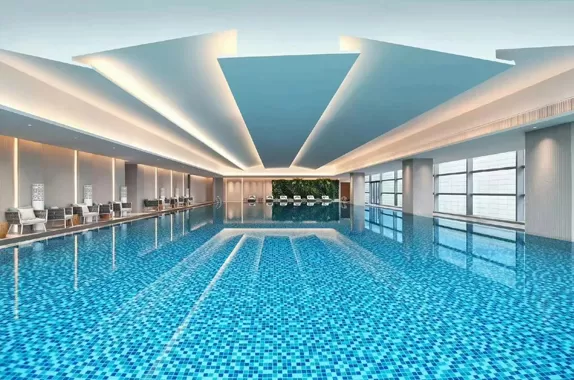
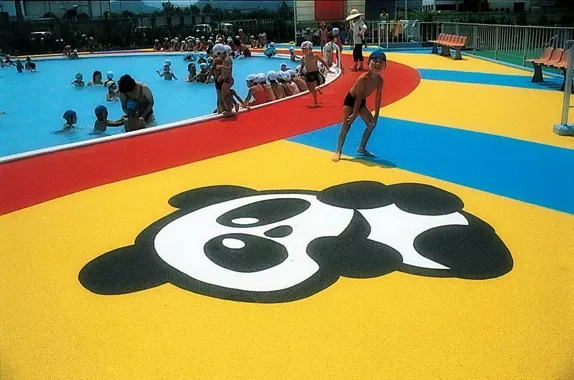
Repair existing damage and leakage issues in the mosaic pool, enhance the surface durability, water resistance and aesthetics of the pool, extend its service life, and meet the requirements for long-term stable use of the pool.
Composition: Uses high-performance unsaturated resin and various additives as the main film-forming substances, integrating multiple technical components. The formed coating contains a large amount of unsaturated resin, anti-aging agents, dispersants, etc., resulting in high cohesion between polymer segments.
Core Characteristics
Strong Adhesion: Bonds tightly to the mosaic surface and substrate, effectively enhancing the bonding force between subsequent coatings and the substrate.
Excellent Fillability: Fills small gaps and minor depressions on the mosaic surface, forming a smooth transition layer to lay a good foundation for topcoat application.
Good Water Resistance: Has certain water penetration resistance, which can initially block water from invading the substrate and reduce the risk of leakage.
Moderate Drying Speed: At room temperature (20-25°C), the drying time of the primer is about 4-6 hours, and that of the middle coat is about 6-8 hours, facilitating construction connection.
Composition: Consists of aspartate resin, isocyanate curing agent, pigments and fillers, and additives.
Core Characteristics
Superior Weather Resistance: Resists long-term UV radiation without fading or chalking, adapting to the complex climatic environment of outdoor pools.
Excellent Water and Chemical Resistance: Can be immersed in water for a long time, and resists corrosion from pool water disinfectants (such as chlorine), with no blistering or peeling.
Rapid Curing: At room temperature, it dries to the touch 10-30 minutes after spraying and fully cures within 24 hours, significantly shortening the construction period.
High Elasticity and Impact Resistance: The elongation at break can reach more than 300%, which can adapt to minor deformation of the substrate, effectively resist external impact, and reduce surface damage.
Drainage and Sludge Removal: Completely drain the water in the pool, pump out residual water with a water pump, then clean the sludge, debris and moss at the bottom and walls of the pool. Rinse the surface with a high-pressure water gun (pressure 0.8-1.2MPa) to ensure no obvious dirt remains.
Damage Repair: Inspect the condition of the mosaic. For fallen or loose mosaics, first remove the surrounding damaged parts, clean the dust and debris on the substrate, repair the substrate with epoxy mortar, and re-paste the same specification mosaic after the mortar cures (24 hours) to ensure a smooth surface.
Grinding: Use an angle grinder to grind the entire mosaic surface, remove the aged layer, oil stains and protruding impurities, so that the surface roughness reaches 40-60μm to enhance the adhesion of the unsaturated paint. After grinding, clean the surface dust with a vacuum cleaner, then wipe it clean with a dry cloth.
Moisture Content Testing: Use a concrete moisture content tester to detect the substrate moisture content, which is required to be ≤8%. If the moisture content exceeds the standard, use a blower or drying equipment for ventilation and drying until it meets the standard.
Primer Application
Mixing Ratio: Mix the unsaturated paint primer at a ratio of 3:1, stir evenly and let it stand for 5-10 minutes to eliminate bubbles.
Construction: Apply evenly with a wool brush or short-pile roller, control the coating thickness at 30-40μm, and avoid missing coating or sagging. After applying each area (about 5-10㎡), check for bubbles in time; if there are bubbles, pierce them with a needle and smooth them. Apply 1 coat of primer, and proceed to the next process after it is completely dry (4-6 hours at room temperature).
Middle Coat Application
Mixing Ratio: Follow the same mixing method as the primer, and stir evenly according to the middle coat product instructions.
Construction: Apply with a roller, control the thickness at 50-60μm, and apply 1-2 coats (adjust according to surface flatness; if there are still small gaps on the surface, add 1 more coat). The interval between each coat is 6-8 hours (drying at room temperature). After the last coat of middle coat dries, lightly sand the surface with 400-mesh sandpaper to remove burrs and particles, then clean the dust for later use.
Pre-Construction Preparation: Inspect the middle coat surface to ensure no dust, oil stains or damage. Control the construction environment temperature at 5-35°C and relative humidity ≤85%. If the environmental humidity exceeds the standard, turn on a dehumidifier to reduce humidity. Prepare a high-pressure airless spraying device (nozzle diameter 0.4-0.6mm, working pressure 15-20MPa), and debug the device in advance to ensure uniform spraying.
Material Mixing Ratio: According to the ratio of component A (aspartate resin) to component B (isocyanate curing agent) of the aspartic polyurea topcoat (usually 1:1, refer to the product manual for details), mix automatically through the device. The mixed material must be used up within 20 minutes (to avoid curing).
Spraying Construction
First Coat Spraying: Start from one end of the pool, spray evenly in the vertical direction of the pool wall, control the thickness at 80-100μm, ensure the coating covers the middle coat surface evenly without missing coating or exposing the base. During spraying, keep the spray gun 30-40cm away from the surface, and move at a speed of 20-30cm/s.
Second Coat Spraying: After the first coat of topcoat dries to the touch (10-30 minutes), spray the second coat in the horizontal direction, control the thickness at 100-120μm. The total dry film thickness reaches 200-220μm to meet the long-term use requirements of the pool.
Curing and Maintenance: After spraying, no personnel are allowed to enter the pool within 24 hours to avoid damaging the coating. Do not fill the pool with water within 7 days to ensure the coating is completely cured (keep ventilated during curing, and avoid high-temperature exposure or low-temperature freezing damage).
Appearance Acceptance: The coating surface should be smooth and flat, with no defects such as bubbles, pinholes, sagging or peeling, and the color should be uniform (consistent with the design color card).
Performance Testing: Use the cross-cut method to test adhesion (cross-cut spacing 1mm, adhesion grade ≥1). Conduct a water tightness test on the pool, fill it to the design water level, and observe for 24 hours; there should be no leakage at the bottom or walls of the pool.
Final Cleaning: After passing the acceptance, clean the tools and material residues at the construction site, collect and transport the construction waste centrally, and keep the environment around the pool clean.
Material Quality Control: All materials (unsaturated paint, aspartic polyurea topcoat, auxiliary materials) must provide factory qualification certificates and test reports.
Construction Process Control: Before each process, conduct technical disclosure to the operators. Arrange quality inspectors to patrol the entire construction process, focusing on checking the substrate moisture content, coating thickness and mixing ratio accuracy, and rectify problems in time. After each process is completed, it can only enter the next process after passing the acceptance.
Post-Maintenance Control: Formulate a maintenance management system, arrange special personnel to be responsible for inspections during the maintenance period, prohibit irrelevant personnel from entering the pool to avoid impact or scratches on the coating. If it rains during the maintenance period, cover it with a rain cloth in time to prevent rainwater from washing the uncured coating.
Personnel Protection: Operators should avoid direct skin contact with paint and auxiliary materials. Conduct safety training before construction to master emergency treatment methods.
On-Site Protection: Set up obvious warning signs at the construction site and keep the construction site well-ventilated.
Equipment Safety: Before construction, check the lines and joints of the high-pressure airless spraying equipment to ensure no electric leakage. Equipment operators must be certified and strictly follow the equipment operating procedures; illegal operations are prohibited. After construction, clean the equipment in time to avoid paint curing and blocking the pipeline.