Water Park Coating Renovation Implementation Plan
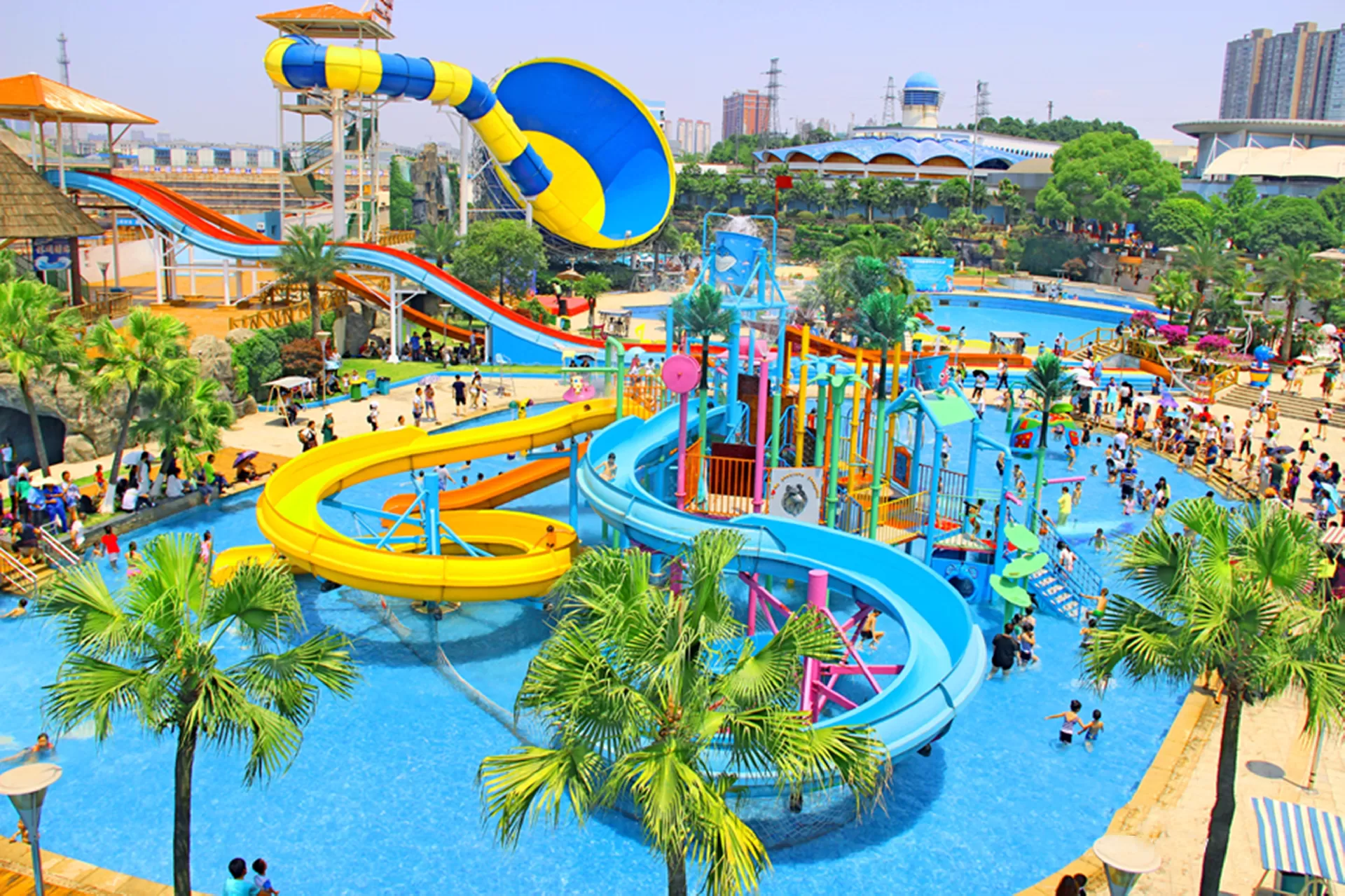
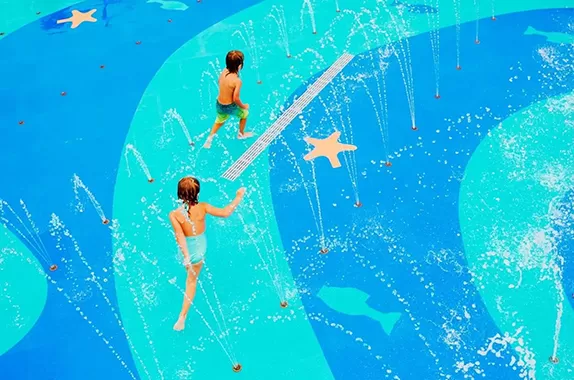
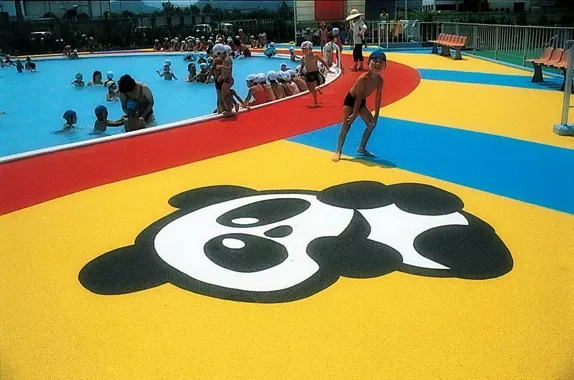
Aiming at the problems of wear, scratches and local peeling of the original coatings in the water park's play area and lazy river, light renovation work will be carried out to restore surface integrity and aesthetics, improve the water resistance and impact resistance of the coatings, ensure the normal operation of facilities, and extend their service life.
Type: Epoxy interface agent (suitable for the connection between the original coating and the new topcoat to avoid delamination)
Core Characteristics:
High Adhesion: Bonding strength with the polished old coating and concrete base ≥ 1.5MPa to prevent delamination in the later stage;
Excellent Water Resistance: Water absorption rate ≤ 3% after curing, suitable for the long-term humid environment of water parks;
Fast Drying: Surface drying in 4–6 hours at room temperature (20–25℃), and topcoat construction can be carried out in 12 hours, shortening the construction period.
Type: Topcoat (balancing environmental protection and durability, complying with the safety standards for amusement facilities)
Core Characteristics:
Impact Resistance + Wear Resistance: Pencil hardness ≥ 2H, wear resistance (Taber Abrasion Test) ≤ 5mg/1000 cycles, resistant to trampling by tourists and friction from drifting boats;
Water Resistance & Chemical Resistance: No blistering or peeling after long-term immersion in water, resistant to corrosion by swimming pool disinfectants (chlorine concentration ≤ 10ppm);
Easy Cleaning + Aesthetics: Surface glossiness (60°) can be selected as matte (20–30°) or semi-matte (40–50°), stains are easy to rinse off, and colors can be customized (matching the original color tone of the water park).
Facility Shutdown and Isolation: Turn off the water system in the renovation area, drain the accumulated water in the lazy river/play area (use submersible pumps to drain residual water), set up hard isolation barriers (height ≥ 1.2m), and post "No Entry During Construction" warning signs.
Surrounding Protection: Cover surrounding equipment (such as water spray nozzles, lights, handrails) and floor tiles with waterproof plastic film, and seal the edges with masking tape to avoid paint contamination.
Tool Preparation: Large grinders/angle grinders (equipped with 80–120 mesh sandpaper discs), handheld grinders (for edge and corner treatment), industrial vacuum cleaners, wool rollers (for interface agent/topcoat), putty knives (for repair), hygrometers, tape measures.
Overall Grinding:
Large-Area Zones: Use angle grinders to grind uniformly along the downstream direction (lazy river) or horizontal direction (play area), remove the aging layer, stains and raised impurities on the surface of the old coating, and control the grinding depth at 0.1–0.2mm (only remove the worn layer and retain the intact old coating as the base);
Edges, Corners & Joints: Use handheld grinders for fine grinding to avoid excessive grinding that damages the base layer;
Cleaning: Immediately use an industrial vacuum cleaner to remove dust after grinding, then wipe twice with a damp cloth (wrung out) to ensure no dust or oil stains remain on the surface (inspection standard: no obvious dust residue when touched by hand).
Moisture Content Testing: Use a hygrometer to test the moisture content of the base layer, which is required to be ≤ 8%; if the moisture content exceeds the standard (e.g., after rain), turn on industrial fans (1 unit per 50㎡) for ventilation and drying until it meets the standard.
Classification Treatment of Damages:
Small Scratches (Depth ≤ 0.5mm): Directly fill with topcoat-specific putty (same color as the topcoat), scrape flat with a scraper, then lightly polish smooth with 240-mesh sandpaper;
Peeling/Exposed Base Layer (Area ≤ 0.1㎡): First clean the loose base layer at the damaged part (scraped off with a putty knife), fill with epoxy repair mortar (mixing ratio: Component A : Component B = 1:1) to be flush with the surrounding old coating, and polish smooth with 120-mesh sandpaper after curing for 6 hours;
Joint Cracks (Width ≤ 2mm): Inject water-based epoxy sealant, scrape the surface flat with a scraper, and polish after curing for 4 hours.
Inspection After Repair: Visually inspect whether the repaired parts are flat, touch with hands to ensure no obvious unevenness, and ensure smooth connection with the surrounding old coating.
Material Mixing Ratio: Mix according to the interface agent product instructions (usually Component A : Component B = 10:1), stir for 2 minutes with an electric mixer (rotating speed 500r/min), stand for 5 minutes to eliminate bubbles, and use up the mixture within 1 hour after mixing (to avoid curing).
Brushing Construction:
Use a wool roller to brush uniformly in the same direction, control the thickness at 30–40μm (dosage about 0.2kg per ㎡), and focus on brushing the repaired parts, edges and joints (can be brushed one more time to enhance adhesion);
Avoid Missing Coating & Sagging: If sagging occurs, immediately roll flat with a dry roller; mark the missed coating areas and touch up;
Drying: Stand at room temperature for 6 hours (or according to product instructions) until the interface agent is completely dry (inspection standard: no marks left when lightly pressed with fingers).
First Coat of Topcoat (1 Day):
Mixing Ratio: Mix two-component topcoat according to the ratio of Component A : Component B = 5:1 (or product instructions), stir for 3 minutes and then stand for 5 minutes, and use up the mixture within 2 hours after mixing;
Brushing: Use a short-haired wool roller (to avoid lint shedding) to brush along the grinding direction, control the thickness at 50–60μm (dosage about 0.3kg per ㎡), and the curved surface area of the lazy river can be brushed in small sections to ensure uniform coverage;
Drying: Dry at room temperature for 8–12 hours (avoid high-temperature exposure or rain; cover with rain cloth if it rains).
Second Coat of Topcoat (1 Day):
Inspection: After the first coat is dry, visually inspect for missing coating and pinholes; if any, lightly polish with fine sandpaper (400 mesh) and touch up;
Brushing: Brush in the direction perpendicular to the first coat (to enhance coating uniformity), control the thickness at 60–70μm (dosage about 0.35kg per ㎡), and the total dry film thickness reaches 110–130μm;
Drying: Dry at room temperature for 12–24 hours, during which no personnel are allowed to enter and no contact with water is permitted.
Quality Acceptance:
Appearance: The coating surface is flat, without missing coating, sagging, pinholes or peeling, and the color is uniform (consistent with the design color card);
Adhesion: Test by cross-cut method (cross-cut spacing 1mm, 3 horizontal lines + 3 vertical lines), adhesion grade ≥ Grade 1 (no coating peeling);
Water Retention Test: Fill the lazy river/play area to the normal water level (fill the lazy river to 1/2 of the water depth), stand for 24 hours, and check for no water leakage and no blistering of the coating.
On-Site Restoration: Remove isolation barriers, clean up protective plastic film and masking tape, rinse the surrounding ground with clean water, inspect and restore equipment (e.g., turn on water spray nozzles for testing).
Material Control: The interface agent and topcoat shall be provided with factory qualification certificates and test reports.
Process Acceptance: The next construction process can only be carried out after the completion of the previous process.
Environmental Control: The construction temperature is controlled at 5–35℃, and the relative humidity ≤ 85%; if the temperature is lower than 5℃, turn on heaters (avoid open flames) to raise the temperature; use dehumidifiers to reduce humidity when the humidity exceeds the standard.
Personnel Protection: Operators shall avoid direct skin contact with paints and auxiliary materials; conduct safety training before construction to master emergency treatment methods.
On-Site Protection: Set up obvious warning signs at the construction site and maintain good ventilation at the construction site.
Equipment Safety: Inspect the circuits and joints of high-pressure airless spraying equipment before construction to ensure no electric leakage; equipment operators must hold certificates to work, strictly follow the equipment operation procedures, and prohibit illegal operations; clean the equipment in a timely manner after construction to avoid paint curing and pipeline blockage.